Baby Leap: Baby Tracker, Diary
- 4.4
- Rating
- 100.00K
- Installs
- Free
- Price

 Analysis by App-foxy
Parenting apps can be useful, but only when they reduce the mental load instead of adding another chore. After spending time with Baby Leap: Milestone Tracker, I found it most interesting as a gentle companion for parents who want one place to follow development, breastfeeding, and everyday milestones. It is a free parenting app from Omega Solutions, Inc., and its focus is narrower and more practical than a general family organizer.
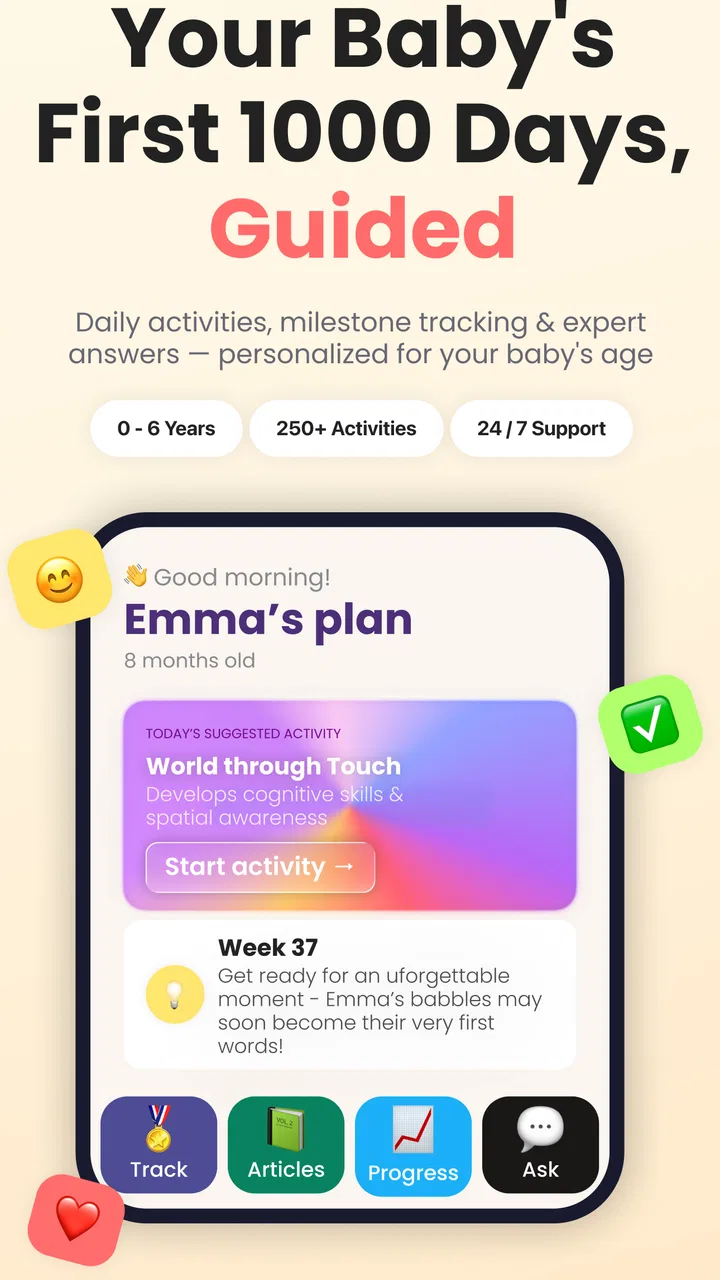
The app’s store summary describes it as a companion for baby development, breastfeeding, and milestone tracking, while the short description simply calls it Baby Leap. That combination gives a fair idea of its purpose: it is not trying to replace a pediatrician, and it is not a full household calendar. Instead, it aims to help a parent notice patterns, record meaningful moments, and keep developmental information easier to revisit.
How Baby Leap fits into everyday parenting
My first impression was that the app makes the most sense during the early months, when days blur together and small changes can be difficult to remember. A parent may know that a baby has started doing something new, but later struggle to recall when it happened or how it fit alongside feeding and other routines. A milestone tracker gives those observations a home rather than leaving them scattered across notes, messages, and memory.
You May Also Like

 Blood Strike: 2.5 Anniversary
Blood Strike’s Loadouts Turn Every Drop Into a Tactical Gamble
A close look at Blood Strike’s custom loadouts: how fast access to signature weapons reshapes its battle royale rhythm, rewards preparation, and narrows the gap between fights.

 Pandora - Music & Podcasts
Pandora’s Music Is Easy to Start, but Harder to Recover
Pandora’s strength is its low-effort path from a seed to a station. Its weak spot is how much confidence it asks you to place in connection, setup, and quiet recovery.

 8 Ball Pool
 Is Built on Rivalries, Rematches, and Routine
A close look at the rivalries, rematches, shared routines, and unanswered safety questions that turn a quick pool match into a persistent mobile community.

 Samsung Music
’s Quiet Strength Is Playing What You Already Own
Its reach comes less from spectacle than from dependable access to a personal library. That simplicity is both the app’s strongest retention engine and its ceiling.

 AccuWeather: Weather Radar
AccuWeather Review: A Quick, Clear Forecast for Everyday Decisions
For everyday plans, the best forecast is the one you can understand quickly. AccuWeather makes rain timing, radar, and local conditions easy to act on, with a few trade-offs.

 Hill Climb Racing
Why Hill Climb Racing Still Turns Crashes Into One More Run
A tiny car, a bumpy hill and one more upgrade: Hill Climb Racing keeps resurfacing because its simple chaos makes every near-miss feel personal.
More From Our News Desk



The parenting category is important here. This is not an entertainment app for children, and it is not designed around a single medical task. Its usefulness comes from combining several kinds of baby-related tracking in one experience. That can be convenient for a parent who does not want separate tools for developmental observations and breastfeeding notes.
I would describe the overall role as supportive rather than authoritative. Development does not follow a perfectly timed script, and a checklist should never become a test that a baby is expected to pass. The best way to use Baby Leap is as a record of what you are observing, not as a source of pressure or a substitute for professional advice.
The app is rated for Everyone, which fits the subject matter and makes it approachable for a broad family audience. It has a 4.6 average from around 2.9 thousand ratings, with more than 100 thousand installs. Those figures suggest that the concept has found a real audience, although popularity alone cannot tell you whether its workflow suits your household.
What the free access means in practice
Baby Leap is free to install, so you can begin exploring it without paying an upfront purchase price. That matters for new parents, because it lets you see whether the organization style feels natural before committing money. Free access is especially valuable when you are already testing several parenting tools and do not want to pay for every experiment.
There are also in-app purchases, listed at $14.99 to $270.00 per item. The range is wide, so I would not treat the free label as a promise that every part of the experience is permanently available without payment. Before buying anything, I would look carefully at the exact item, what period of access it covers, and whether it solves a problem you actually have.
That distinction is central to the app’s value. The free starting point lowers the risk, but the paid value depends on the usefulness of the specific upgrade rather than on the existence of extra content alone. I would only spend money after using the no-cost portion long enough to understand whether recording milestones and feeding information has become part of my routine.
The purchase range also means different families may reach different conclusions. Someone who only wants occasional milestone notes may find the free experience sufficient. A parent who wants a more complete, ongoing companion may consider a paid option if the available purchase clearly supports that workflow. I would avoid paying simply because a premium option appears during an emotional or exhausting parenting moment.
Where the app can save mental effort
The strongest practical benefit is consolidation. Instead of writing a milestone in a paper notebook, keeping feeding details in a separate app, and relying on photographs for memories, Baby Leap is intended to bring related observations closer together. That does not eliminate the work of recording information, but it can make the record easier to revisit.
A realistic scenario is a parent checking the app at the end of a busy day. During the morning, the baby may have shown a new movement or interaction. Later, the parent may want to note it while the detail is still fresh, then connect it mentally with the baby’s current stage and feeding routine. The value is not that the app magically interprets the day; it is that the parent has a consistent place to capture it.
One useful habit is to record only information that you expect to use later. If every minor observation becomes an obligation, tracking can turn into another source of stress. I would use the milestone area for meaningful changes and the breastfeeding area for patterns that help with conversations, reflection, or personal organization. Selective recording makes the app more sustainable than trying to document every hour.
Another practical tip is to review entries when you are calm rather than repeatedly checking them throughout the day. A tracker works better as a periodic overview than as a live scoreboard. That approach reduces the temptation to compare a baby’s progress rigidly with a sequence inside an app.
Developmental tracking without turning it into a checklist
Milestone tools are most helpful when they encourage observation. Babies develop unevenly, and a milestone may appear gradually rather than on one memorable date. I would treat Baby Leap as a prompt to notice skills and changes, then add personal context where the app allows it, rather than assuming that a listed milestone is a deadline.
This is also where the app may be less suitable for anxious parents. If seeing developmental prompts makes you repeatedly worry about whether your baby is “on time,” a simpler journal or a conversation with a healthcare professional may be a better choice. No tracker can account for every child’s temperament, health history, environment, or individual pace.
The app can still help prepare for appointments, provided its notes are treated as personal observations. A parent may find it easier to remember questions after reviewing what has changed over several days or weeks. That is a practical use that goes beyond collecting sentimental memories, but it should remain a preparation aid rather than a diagnostic system.
I also recommend keeping the distinction between a milestone and a routine clear. Feeding information can show what has been happening, while a developmental note describes something the baby is learning or doing. Mixing those categories mentally can make the record harder to interpret. Using each part for its intended purpose should make later reviews more useful.
Breastfeeding tracking and the cost of detailed logging
Breastfeeding tracking can be helpful when a parent wants to remember patterns during a tiring period. It may reduce the need to reconstruct the day from memory, particularly when sleep deprivation makes times and sequences difficult to recall. For some families, that alone justifies trying the app.
There is a trade-off, though: detailed logging takes attention. A parent recovering from birth, feeding on demand, or caring for more than one child may not have the energy to record everything consistently. Missing entries do not make the record useless, but they do mean it should not be treated as a complete account.
My preferred workflow would be to use the breastfeeding section only for decisions or questions that matter. For example, if I wanted to notice a broad pattern or prepare a question for a lactation consultant, logging could be worthwhile. If I were recording every feed only because I felt guilty about missing one, I would step back. The best tracker is the one that supports your routine without becoming the routine.
This is one of the app’s less obvious trade-offs. Combining milestone and breastfeeding information sounds efficient, but it also creates more opportunities for overtracking. The same centralization that makes the app convenient can make it feel demanding if you expect perfect records.
How it compares with notebooks, phone notes, and specialist tools
A paper notebook remains a strong alternative for parents who want complete control and no learning curve. It is fast, private in a physical sense, and flexible enough for drawings, questions, and observations that do not fit a preset structure. Baby Leap is more appealing when you prefer organized digital records and do not want to design your own pages.
Basic phone notes are similarly flexible. They are often better for free-form reflections, such as describing a difficult night or writing down a question before an appointment. Baby Leap should have the advantage when the parent wants baby development, breastfeeding, and milestones treated as related subjects instead of a long stream of unstructured text.
A specialist feeding tracker may be a better choice for someone whose only priority is precise feeding management. A general family organizer may win for parents who need shared schedules, shopping lists, childcare coordination, or household reminders. Baby Leap’s value comes from its parenting focus, not from being a universal family management system.
There is also a difference between a milestone tracker and a medical resource. A medical app or direct professional guidance is more appropriate when the concern involves symptoms, feeding difficulty, growth, or a developmental question that needs interpretation. Baby Leap can help you organize what you have noticed, but organization is not the same as clinical guidance.
Who is likely to get the most from it
I think the app is a good fit for first-time parents who want gentle structure without building a spreadsheet from scratch. It may also suit parents who enjoy looking back at developmental changes and prefer digital records to a baby book. The combination of milestone and breastfeeding themes makes it more relevant to early parenting than a generic notes app.
It can also work for a parent who shares caregiving responsibilities and wants a common reference point. The benefit depends on whether the people involved actually agree to record information consistently. If only one person uses it, the app may still be useful, but it will not automatically create a shared family system.
Parents who dislike logging, want a highly specialized feeding tool, or need a full childcare calendar should probably skip it. I would also hesitate to recommend it to anyone who knows that developmental checklists increase anxiety. In those cases, a notebook, a simpler journal, or professional support may provide more value with less emotional friction.
Because the current version is 1.35.2 and the minimum operating system is Android 7.0, compatibility is reasonably approachable for people using an older Android device that still meets that requirement. I would still check the device experience before relying on it for important records, especially if the phone is shared, aging, or short on storage.
My verdict on paying for the experience
My recommendation is to start with the free access and judge Baby Leap by one question: does it make your parenting notes easier to maintain and more useful to revisit? If the answer is no, paying will not fix a workflow that already feels inconvenient. If the answer is yes, then examine the exact in-app purchase rather than assuming every paid option offers the same kind of value.
The free entry point is the app’s clearest strength from a buying perspective. You can test whether milestone and breastfeeding tracking fit your life before making a financial commitment. The paid range, from $14.99 to $270.00 per item, makes careful checking especially important. I would make a purchase only when the benefit is concrete, recurring, and relevant to my own parenting needs.
Overall, I see Baby Leap as a thoughtful organizational companion rather than an essential parenting authority. It is most valuable when it helps a tired parent remember, notice, and prepare without demanding perfection. Its limitations are equally clear: tracking takes effort, developmental information can be misread as a schedule, and families seeking medical advice or broad household planning may need another tool.
For a parent who wants a focused digital place for baby development, breastfeeding, and milestones, I would recommend giving Baby Leap: Milestone Tracker a fair trial. For someone who prefers pen and paper, needs specialist feeding controls, or feels pressured by checklists, I would skip it. My final view is positive but measured: use the free experience first, keep the records purposeful, and pay only when the specific purchase earns a clear place in your routine.
FAQs for Baby Leap: Baby Tracker, Diary
01What is Baby Leap: Milestone Tracker?
Baby Leap: Milestone Tracker is an app designed to help parents monitor their baby's developmental milestones. It provides insights into what behaviors and skills to expect as your baby grows. The app also offers tips and activities to encourage development, making it a valuable tool for new parents looking to track their child’s progress.
02Is Baby Leap: Milestone Tracker free to use?
Baby Leap: Milestone Tracker offers a free version with basic tracking features. However, for access to premium content such as detailed milestone breakdowns and personalized activity suggestions, there is a subscription fee. This ensures that you get comprehensive guidance tailored to your baby’s unique developmental journey.
03How accurate is Baby Leap: Milestone Tracker?
The app is developed by child development experts and uses scientifically-backed data to help track milestones. It is important to remember that each baby develops at their own pace, and while the app provides a general guide, individual variations are normal. Always consult with a pediatrician for concerns about your baby’s development.
04Can I use Baby Leap: Milestone Tracker for multiple children?
Yes, Baby Leap: Milestone Tracker allows parents to track the development of multiple children. The app provides separate profiles for each child, ensuring personalized tracking and advice. This feature is particularly useful for parents with twins or multiple young children at different developmental stages.
05Does Baby Leap: Milestone Tracker offer customer support?
Yes, the app provides customer support through email and an in-app help center. Users can access FAQs, troubleshooting guides, and contact options for further assistance. The support team is responsive and committed to helping users resolve any issues quickly, enhancing the overall user experience.
Pros
- User-friendly interface for easy navigation.
- Tracks developmental milestones accurately.
- Customizable reminders for parents.
- Includes expert advice and tips.
- Available offline for convenience.
Cons
- Limited features in the free version.
- Occasional syncing issues reported.
- Some ads in the free version.
- No option for multiple child profiles.
- Limited language options available.

Baby Leap: Baby Tracker, Diary
Gallery